
Original Kolhapuri Chappals: History & The Online Pioneer
True craftsmanship does not shout; it simply endures. For generations, the art of handcrafting an authentic Kolhapuri chappal was a tradition deeply rooted in the physical markets and historic artisan clusters of Maharashtra.
Today, that 800-year-old legacy has successfully crossed into the digital frontier. As the pioneers of Kolhapuri online, Vhaan has built the definitive bridge between an ancient craft and a global audience, ensuring that traditional artistry is celebrated, protected, and empowered.
An 800-Year Heritage of Royal Craftsmanship
The Kolhapuri chappal is not merely an item of footwear; it is a historical artifact and a cultural symbol. The genesis of the Kolhapuri chappal can be traced back to the 12th century. Before the digital age, these sandals were known by various regional names like Kapashi, Paytaan, and Bakkalnali, each denoting the specific village of their origin.
The craft's true historical significance was cemented by the patronage of figures like Chhatrapati Shahu Maharaj. His royal endorsement elevated the sandal from common peasant wear into a symbol of rustic elegance, making it the preferred footwear for daily use and courtly life.
The authentic creation process remains incredibly rigorous:
-
The leather is vegetable-tanned using traditional, eco-friendly agents like tanning powder (Hirda) and vegetable dyes.
-
The various layers of the sole are stacked and hand-stitched together using thick, waxed cotton thread.
-
Traditionally, no nails or adhesives are used in the core construction.
Recognizing the unique nature of this footwear and the urgent need to protect traditional artisans, the Kolhapuri chappal was granted a Geographical Indication (GI) tag in 2019.
The Modern Crisis: Fakes vs. Authenticity
Despite its global fame and GI status, the craft faces significant modern challenges. The market has been flooded by cheap, mass-produced plastic and synthetic leather imitations that undercut the price and quality of the authentic product. This influx of fakes confuses consumers and directly hurts the market for real artisans.
Simultaneously, younger generations are increasingly drawn to more lucrative urban jobs, leading to a steady decline in the number of skilled master artisans who can perform intricate techniques like the Jodana (stitching).
The Digital Genesis: Pioneering the Online Space
When the intricate art of styles like the Kapashi, Senapati, and Maharaja were at risk of being overshadowed by factory-made replicas, Vhaan recognized that the craft needed a modern stage.
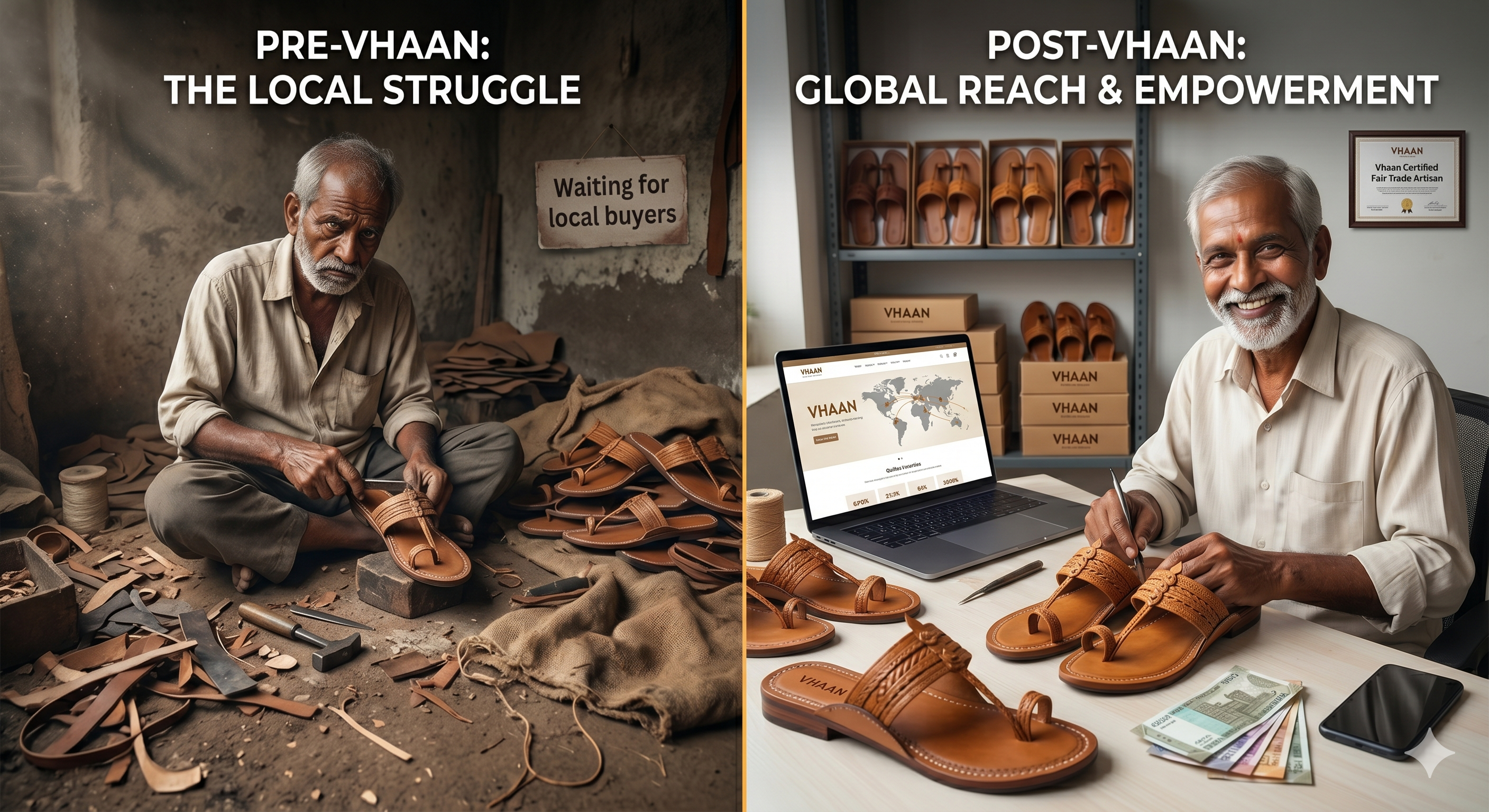
By becoming the first to digitize this legacy, the architecture of the online Kolhapuri market was built from the ground up. This meant solving complex challenges that had never been addressed: translating traditional, custom-fit handmade sizing into reliable global e-commerce standards, and building supply chains capable of moving delicate leather goods from rural workshops to international doorsteps.
Highlighting Essential Value Through Clean Aesthetics
In a digital landscape crowded with loud marketing, authenticity stands out through restraint. To properly honor the craft, the digital presentation of these chappals relies on a clean, professional visual aesthetic. By strictly excluding heavy brand logos, text clutter, and flashy graphics from visual materials, the rich textures of the vegetable-tanned leather and the flawless hand-braiding are allowed to take undisputed center stage.
This approach serves a crucial purpose: it completely shifts the narrative away from economical pricing and discount chasing. Instead, it educates the global consumer on the essential value of a handcrafted masterpiece. It demands that the market respect the true worth of the artisan's labor.
Empowering the Hands Behind the Craft
By cutting out the traditional network of intermediaries, the online revolution ensures that a fair, premium share of the value goes directly back to the craftsmen. This economic stability brings dignity back to the trade, proving to the younger generation of artisan families that authentic leather crafting is a respected and sustainable career in the modern economy.
The original standard of the Kolhapuri chappal was forged in the workshops of Maharashtra, and its future is secured on the global digital stage. Step into an 800-year-old legacy, built for today.