
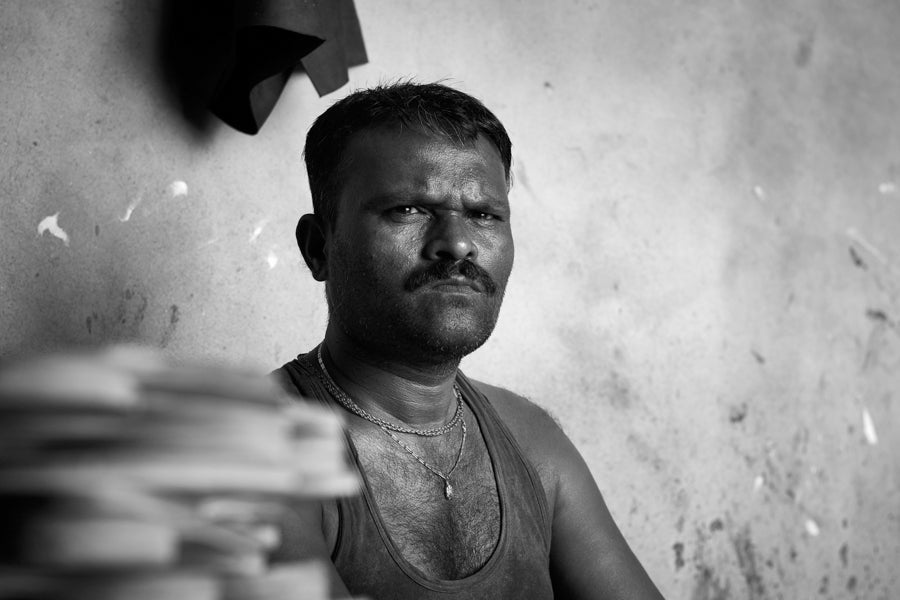
Kolhapuri Chappal is a registered Geographical Indication (GI) of India. The registration, application No. 169, was granted in December 2018 and covers eight districts: Kolhapur, Sangli, Satara and Solapur in Maharashtra, and Belagavi, Dharwad, Bagalkot and Vijayapura (Bijapur) in Karnataka. It protects the name "Kolhapuri Chappal" for handmade, all-leather chappals made in those districts by traditional methods. The makers who may use the name are listed by the GI Registry as authorised users, and anyone can check that list.
The GI at a glance
| Registered name | Kolhapuri Chappal |
| Category | Handicraft (footwear, Class 25) |
| GI application | No. 169, filed May 2009 |
| Registered | December 2018, made public July 2019 |
| Registered proprietors | LIDCOM (Maharashtra) and LIDKAR (Karnataka), the leather industries development corporations of the two states |
| Districts in Maharashtra | Kolhapur, Sangli, Satara, Solapur |
| Districts in Karnataka | Belagavi, Dharwad, Bagalkot, Vijayapura (Bijapur) |
| Valid until | May 2029, renewable |
What a GI tag is
A Geographical Indication is a legal right over a product name that is tied to a place. It says that a product's character comes from where it is made and from the people who make it there. Darjeeling tea, Banarasi saree and Mysore silk are protected in the same way.
The Kolhapuri registration took almost ten years. Before it, anyone anywhere could make a chappal from any material and call it a Kolhapuri. Since 2018, the name belongs to the region and its craft.
What makes a pair a Kolhapuri Chappal under the GI
A pair that can carry the name is:
- Made in one of the eight registered districts.
- Made by hand, using traditional techniques. Factory production does not qualify.
- Made of natural leather, traditionally vegetable-tanned. Synthetic materials do not qualify.
- Open-toed, in the traditional construction, with leather straps and stitching.
The GI Register has two parts
This is the part most explanations leave out, and it is the part that lets you check a claim.
Part A records the GI itself: the name, the districts, the description of the product and the registered proprietors, LIDCOM and LIDKAR.
Part B records the authorised users: the individual makers who are registered to use the name "Kolhapuri Chappal" on what they make. Any maker in the eight districts can apply. Each registration carries a number and a validity date, and the GI Registry issues a certificate for it.
So when a seller says its chappals are "GI certified", the certificate behind that claim should be a Part B registration for the person who made the pair. A certificate names a person, not a brand.
What the GI does not protect
The GI protects the name, not the shape. A brand can make an open-toed, braided leather sandal anywhere in the world and sell it, as long as it does not call it a Kolhapuri.
The GI is enforced in India. Protecting the name in another country needs protection under that country's law.
The Prada case shows both. In June 2025, Prada showed open-toed braided leather sandals in its Spring/Summer 2026 men's show in Milan and described them only as "leather sandals." After strong criticism in India, Prada acknowledged that the design was inspired by traditional Indian handmade footwear. In December 2025 it signed an agreement with LIDCOM and LIDKAR to have 2,000 pairs made by artisans in the GI districts, priced at about ₹84,000 (US$930) a pair.
That agreement came from public pressure, not from the GI alone. The law protects the word. The rest of the craft's protection depends on buyers who can recognise the real thing and choose it.
Why Karnataka is part of a "Kolhapuri" GI
The name comes from Kolhapur, but the craft was never confined by a state border. Leather-working families in the neighbouring districts of northern Karnataka make the same chappal by the same methods. The two states' leather development corporations filed for the GI together, so the registration covers the whole craft region, not only the city that gave it its name.
How to check a seller's GI claim
- Ask who made the pair and where. A seller of genuine Kolhapuris can name the district. "Made in India" is not an answer.
- Ask for the authorised-user certificate. It should show the maker's name, a registration number and a validity date. A seller who says "GI certified" should be able to show it.
- Check the number. The GI Registry's public search lists the authorised users for application No. 169. The name on the certificate should be there.
- Look for the LIDCOM QR code. LIDCOM has introduced QR certificates for Kolhapuri chappals. Scanning one shows the artisan or production unit, the district, the materials and the GI status. Not every genuine pair carries one yet.
- Check the material. A genuine pair is leather throughout: upper, straps, sole layers and stitching. Foam cushioning or synthetic straps make it a different product, whatever it is called.
- Read the name carefully. "Kolhapuri-style", "Kolhapuri-inspired" and "Kolhapuri design" are what sellers write when a product cannot claim the name.
Our guide to identifying an original Kolhapuri chappal covers the leather, sole and stitching in more detail.
Vhaan's Kolhapuri chappals and the GI
Vhaan's Kolhapuri chappals are made by hand in Kolhapur district, one of the eight GI districts, by artisans registered as authorised users of the Kolhapuri Chappal GI. Each artisan's name, registration number and certificate are on our page, so you can check them yourself.
Our pairs do not carry the LIDCOM QR code yet. Until they do, the certificates, a video of every design and our repair service are how we stand behind each pair.
We started Vhaan in 2017 to bring this craft online without changing what it is. We keep the traditional shapes, including Kapashi, Shahu, Senapati and Amdar, made from vegetable-tanned leather. If a pair needs attention after years of wear,
See our Kolhapuri chappals for men
Frequently asked questions
Does Kolhapuri chappal have a GI tag?
Yes. Kolhapuri Chappal is a registered Geographical Indication of India, application No. 169, registered in December 2018 in the handicraft category for footwear.
Which districts are covered by the Kolhapuri chappal GI?
Eight districts: Kolhapur, Sangli, Satara and Solapur in Maharashtra, and Belagavi, Dharwad, Bagalkot and Vijayapura (Bijapur) in Karnataka.
Who owns the Kolhapuri chappal GI?
The registered proprietors are LIDCOM and LIDKAR, the leather industries development corporations of Maharashtra and Karnataka. Individual makers register as authorised users to use the name.
What is a GI authorised user?
A maker registered in Part B of the GI Register to use the name "Kolhapuri Chappal" on what they make. Each registration has a number, a validity date and a certificate issued by the GI Registry.
How can I check whether a seller's Kolhapuri chappals are GI certified?
Ask for the authorised-user certificate of the person who made the pair, and check the name in the GI Registry's list of authorised users for application No. 169. A LIDCOM QR code on the pair, where there is one, can be scanned to check it too.
Does the GI stop other brands from copying the design?
No. The GI protects the name "Kolhapuri Chappal", not the shape. A similar sandal can be sold under a different name, and the GI is enforced in India, not abroad.
Are Prada's sandals Kolhapuri chappals?
Prada's 2025 runway sandals were described as leather sandals and were not Kolhapuri chappals. Under a December 2025 agreement with LIDCOM and LIDKAR, Prada commissioned 2,000 pairs made by artisans in the GI districts.
Are Vhaan's Kolhapuri chappals GI certified?
Vhaan's Kolhapuri chappals are made by hand in Kolhapur district by artisans registered as authorised users of the Kolhapuri Chappal GI. Their names, registration numbers and certificates are listed on our . GI registered artisans page.
About the author: Bhushan Kamble founded Vhaan in 2017. He comes from a cobbler community in Maharashtra and has worked with more than 300 Kolhapuri artisans to revive over 27 endangered designs.